

Direct mail + social media = connection

How These Channels Work Together to Mirror The “Real-Life” Experiences Voters Want
Human interaction has always been a powerful communication tool for political campaigns. Even in an increasingly digital world, this still holds true. Direct candidate-to-voter interaction remains the gold standard as a personal and persuasive tool for building trust. On the flip side, a lack of in-person engagement can cause voters to disconnect.
We know your candidate can’t meet and greet every voter. So what’s the next best thing?
Combining the tangible power of direct mail with the “in-person” feel of social media can help your campaign deliver meaningful and memorable experiences that mirror in-person interactions. This omnichannel approach can also help cultivate trust and credibility.
The Political Advertising Landscape is Changing
Despite the ability of TV and digital ads to reach voters at a high volume, today’s voters can feel they are impersonal, which can undermine credibility. This is because they often appear in oversaturated and interruptive environments where voters are distracted or can easily dismiss them.
FACT:
8 out of 10 surveyed 2025 gubernatorial and mayoral voters felt concerned to some degree about misinformation and disinformation in political advertising.1
Social media and direct mail work together to build connections.
Connecting the two channels can help your campaign earn trust and resonate with voters because they recreate key elements of interpersonal dynamics such as emotional cues, reciprocity, personal attention, and responsiveness.
FACT:
Research shows that political mail and social media ads are two of the top three channels to have the highest impact on the opinions of 2025 gubernatorial and mayoral voters and those surveyed during the general election in 2024.1
5 Good Reasons Why Direct Mail and Social Media Are More Powerful Together:
Both channels mirror presence and draw attention like real-life conversations.
- Direct mail can give your campaign undivided attention with tactile, one-to-one moments as voters engage with it in their space. These interactions can help you stand out, hold attention, and mail gives voters something physical they can keep, revisit, and continually connect with.
- Social media posts can replicate interpersonal interactions by using small cues—such as likes, shares, and comments—as well as short video clips that can inspire them to feel like your candidate is talking to them directly.
Voter quote:
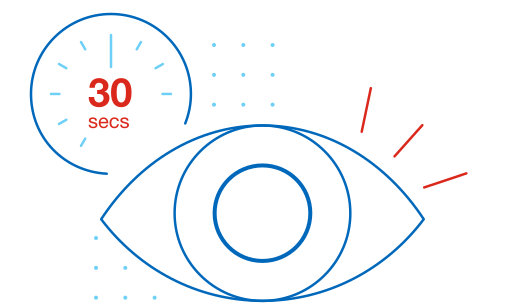
“I like simple 30 second to 1-minute clips talking about specific issues and what they plan to do for each one. It encouraged conversations between friends and where we would send each other posts or ads and ask for each other’s thoughts,”
—Seattle voter2
PRO TIP:
Create a seamless connection between social media engagement and direct mail by tracking voter behaviors to trigger additional online or in-person actions.
For example, you can:
- Send your social media followers a direct mail invitation to join a live stream of a fundraising event where your candidate is speaking.
- Encourage voters who can’t attend in person to donate online during the event.
- Generate an automated, personalized thank-you letter to quickly let these donors know that their contribution is valued.
The bottom line:
By integrating direct mail and social media, campaigns can replicate the feel of real, in-person interactions to deliver credible and meaningful touchpoints. Together, these powerful channels can deepen understanding, boost recall, and create genuine connections that motivate voters to act.

The science of touch: Why physical channels create deeper voter connections
See how your campaign can dig deeper to engage with constituents and form stronger connections using direct mail that are often tied to memory recall, decision-making, and brand loyalty.


